


Internal Relief Valves: Defining a Replacement Interval

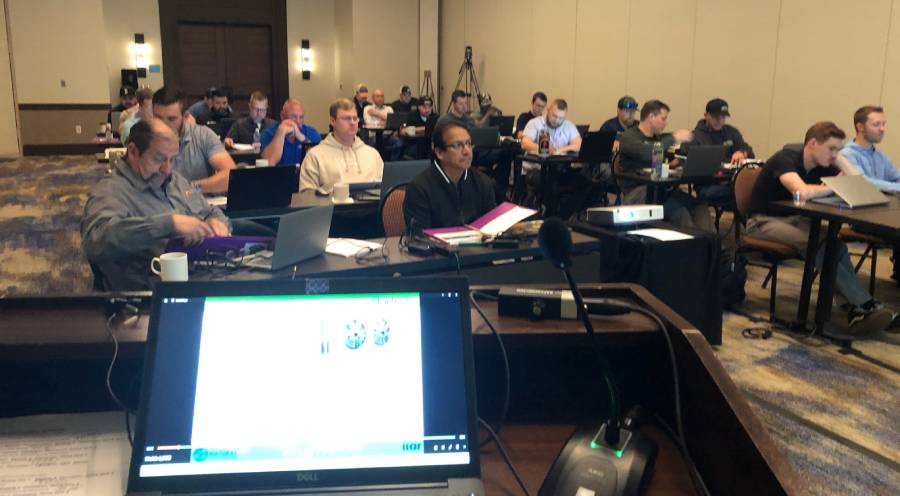
The testing or replacement interval for pressure relief valves that discharge back into an ammonia refrigeration system, commonly known as “internal relief valves,” may be redefined based on a new IIAR research project that aims to collect the valves from members and test them. The project, which is currently underway, is being managed by IIAR staff and members of the IIAR research committee and is being carried out by ioMosaic, a process‑safety engineering firm that provides testing for the petrochemical and chemical industries.

Read More
Everything You Ever Wanted to Know – IIAR Standards

To understand how far the industrial refrigeration industry has come in the last decade, and where it’s headed, the best place to look is its standards. The International Institute of All-Natural Refrigeration has nine standards, a suite of consensus-based, ANSI-approved guides covering everything from putting a system together to taking it out of service.

Read More
Costa Rica Adopts National Standards

A set of Costa Rican refrigeration standards based on IIAR’s Suite of Standards is poised to become law in the country, paving the way for other countries in the region to follow suit. In Costa Rica, the National Fire Protection Association, NFPA, codes already incorporate IIAR standards for anything to do with refrigeration, creating a deference to IIAR standards. However, the new national standards will represent the first time Costa Rica has implemented its own set of standards and codified them into law.

Read More
Three Questions to Consider for a Good Inspection Plan

In an age of proliferating diagnostic tools, visual inspections are still needed, and equally important, an inspection plan a facility can follow. And while IIAR – 6 Inspection, Testing, and Maintenance of Closed‑Circuit Ammonia Refrigeration Systems provides a starting point, system owners must develop a complete plan. “There are no Cliff Notes for IIAR-6, though there is a huge opportunity for teams that lean on the standard – it is a tool in their quiver,” said Suzy Vohsen Bos, Director, Marketing and Client Services of Gamma Graphics Services and the instructor of IIAR’s latest webinar, The Nitty Gritty of Visual Inspections.

Read More
IIAR Eyes AHJ’s to Replace Federal Enforcement

A new picture of how regulatory activities might function in the future is emerging, thanks to efforts by the International Institute of All-Natural Refrigeration’s “NH3 Overdue Regulation Modernization,” or NORM, task force. The task force is currently asking regulators to remove PSM/ RMP requirements that duplicate across agencies or defer to IIAR standards where the standards and regulations overlap.

Read More
IIAR Reduces Student Membership Rate

Membership in IIAR, the industrial refrigeration technical association of record, has changed since its inception nearly four decades ago. What began as a small standards-creation effort led by a group of engineers has ballooned into a community of contractors, end users, manufacturers, students and even regulators.

Read More
Don’t Overlook Mechanical Integrity

Smaller facilities are starting to pay more attention to mechanical integrity, as it remains one of the most cited violation types. Adding to the pressure on facilities to renew focus on mechanical integrity, IIAR 6‑2019: Inspection, Testing, and Maintenance of Closed‑Circuit Ammonia Refrigeration Systems was adopted into the 2024 edition of model codes as the minimum requirement for ITM (Inspection, Testing, and Maintenance) standard for ammonia refrigeration systems, regardless of the system charge.

Read More
Lesson Learned: Where Are You?

Is it helpful, sometimes even really important to know how things are going? The answer is yes! If you don’t audit, check, measure, and/or observe what’s happening you may end up with results you didn’t expect or want. A correction might take a significant effort depending on what is happening and how much time passes between your observations.

Read More
Understanding the Importance of Passivation

In recent years, the quality of the circulated water in evaporative condensers and cooling towers has declined as air and water pollution has increased. As regulations limit the use of many corrosion inhibitors for the hot dip galvanizing process, such as chromates, the passivation process for protection has become even more critical.

Read More
State Regulations, PFAS, Cause Uncertainty for Synthetic Refrigerants

When the U.S. Environmental Protection Agency finalized its Reconsideration of the Technology Transitions Rule in May 2026, it introduced extended compliance dates, relaxed interim GWP limits, and installation flexibility for several subsectors including cold storage. While many in commercial refrigeration saw the reconsideration as a reprieve, it may have introduced unanticipated regulatory challenges from several states.

Read More
Legislative Update: Trump Administration Publishes Updated Regulatory Agenda

On July 4th, 2026, the Trump Administration released its updated Unified Regulatory Agenda for 2026. The Regulatory Flexibility Act requires federal regulatory agencies to publish their regulatory plans on a semiannual basis. The target dates for release are April and October.

Read More
Standards: IIAR Answers Member Questions

The timeliest issues in the industry – from IIAR-2’s relief calculation formula to hot work permits for sulfur sticks – are being discussed in standards subcommittee meetings. This year, at the IIAR Natural Refrigeration Conference & Expo, March 15 - 18, IIAR standards subcommittee leaders convened to give IIAR members a chance to ask their own questions. The Q&A format illuminated some of the biggest issues the industry is working on with regulators and settled some common misconceptions around standards.

Read More
Your Support of NRF Pays for Important Industry Research Projects

The ioMosaic internal relief valve project and others like it are funded by the Natural Refrigeration Foundation, which is supported in large part by the Foundation’s Legacy 100 Club, a new way to contribute to the work of NRF.

Read More
Remembering Mike Laucks

Mike Laucks, remembered by many of his colleagues and friends in the ammonia refrigeration industry for his quick wit and welcoming spirit, passed away peacefully on April 11, 2026. Laucks retired as vice president of engineering at GEA Refrigeration in 2006, where he spent his career in industrial refrigeration.

Read More
IIAR Releases Greenpaper

The International Institute of All-Natural Refrigeration released a new IIAR Greenpaper, a member resource for natural refrigerants. The Greenpaper, which is available on IIAR’s newly launched Resource Center, is an industry reference document that outlines the basics of natural refrigerants, and the direction the industry’s technology is taking.

Read More
Can Natural Refrigerants Save us from PFAS?

In the mid-2000’s, when PFAS “forever chemicals” were first classified by the United Nations Environmental Programme, they were just beginning to be understood as dangerous pollutants. As the evidence mounted for their role in cancer and other health problems, regulators and activists began to outlaw PFAS sources, chief among them, many pesticides commonly used in agriculture.

Read More
IIAR Scholars Attend 2026 Conference

IIAR’s annual conference this year showcased the organization’s growing scholarship program, which saw twelve new IIAR scholarships awarded. The 2026 scholars attended IIAR’s annual conference as part of a fast-growing mentorship effort led by the Natural Refrigeration Foundation. NRF has continuously increased the number of scholars each year, said John Flynn, Chairman of the IIAR Education Committee. The recipients get the benefit of a scholarship which helps defer the cost of their education, but IIAR also covers the cost of travel to the annual conference.

Read More
The Importance of Awareness

Are you aware of changes that happen around you? When a smell changes, or a sound changes, etc. are you so focused on your work or another activity that you don’t even notice? There are five primary senses. Smell, hearing, sight, taste, and touch. However, we actually have considerably more. Researchers have identified approximately 22 to 33 different senses. These additional senses are internal and specialized senses like balance, temperature, pain, proprioception, etc. As we become more aware of the many inputs we have, we can be better equipped to make good decisions.

Read More
Safe Work Practices (SWPs) for End User Operators & Technicians of Closed-Circuit Ammonia Refrigeration Systems

Safe Work Practices(s) are critical for operating and maintaining closed-circuit ammonia refrigeration systems. Developing safe working practices is not just good for workers’ well-being, it is also good for business. The loss of systems’ functionality because of accidents, and the loss of employees’ skills because of injury is costly. It is far more fruitful to spend time to develop and practice safe work than to recover from accidents. Further, the development and engagement of safe work practices is a legal requirement in many jurisdictions and is broadly required in some countries.

Read More
IIAR Introduces Legacy 100 Club Members

The International Institute of All-Natural Refrigeration posted remembrance videos for each of its seven inductees into the Natural Refrigeration Foundation’s Legacy 100 Club. Each inductee to the Legacy 100 Club represents an impactful contribution to the advancement of natural refrigerants, said Mike Chapman, IIAR’s Vice President of Operations. “This is a chance for us to collectively name and acknowledge individuals for their contributions to our industry so that everyone is aware of the history of contributions that have helped to shape what our industry has become today.”

Read More
EPA Adopts “Compliance First” Policy for Enforcement Activities

In December 2025, Craig J. Pritzlaff, Acting Assistant Administrator for the Office of Enforcement and Compliance Assurance (OECA), issued a memorandum that reinforces a “compliance first” orientation as the guiding principle for the U.S. Environmental Protection Agency (EPA). The policy prioritizes environmental compliance “in the most efficient, most economical, and swiftest means possible, while ensuring that our actions align with the clearest, most defensible interpretations of statutory and regulatory mandates.”

Read More
IIAR Task Force to Propose PSM/RMP Changes

IIAR’s newest task force has completed a gap analysis to assess OSHA and EPA’s 30-year-old PSM/RMP programs. The “NH3 Overdue Regulation Modernization,” or NORM, task force will ask regulators to remove regulatory burdens that overlap across agencies or defer to IIAR standards when the standards and regulations overlap. The task force's long-term effort will be to shift some funding and enforcement from federal regulators to state and local authorities. The NORM task force was formed to operate in a rare federal environment in which the Trump administration has opened the door to regulatory reform through Executive Order 14192, which requires agencies to take 10 deregulatory actions for every new regulation.

Read More
IIAR Gives 2026 Awards for Presentation Excellence

Each year, IIAR recognizes the best technical paper presentations offered at the annual Natural Refrigeration Conference. This year’s event took place March 15 – 18 in San Antonio, Texas. The IIAR Award for Presentation Excellence, offered to the top English and non-English language technical papers and previously named the “Andy Ammonia Award,” was created to acknowledge the crucial role that education and information-sharing play within the natural refrigeration industry, and to provide acknowledgment of the expertise that is generously shared by association volunteers.

Read More
IIAR 2026 Conference Shatters Attendance Records

Over 2,000 attendees participated in the International Institute of All-Natural Refrigeration’s Natural Refrigeration Conference & Heavy Equipment Expo in San Antonio, Texas. The event focused on networking, equipment exhibition, and a technical education track that featured industry trends and practical discussion of operational processes and details. “Overall, the conference was better attended than ever before in years past, said Yesenia Rector, IIAR’s Vice President – Education, Outreach and Events.

Read More
IIAR Approves Consensus Body Replacements

IIAR approved 18 Consensus Body replacements on its three consensus bodies for IIAR standards. The replacements are routine maintenance required by the American National Standards Institute (ANSI) and are completed a minimum of every five years or when individuals are no longer participating. IIAR maintains three consensus bodies, 1357, 24689 and CO2&HC. The bodies are the near-final stage of approval for IIAR standards 1,3,5, and 7, and 2,4,6,8, and 9, respectively. The CO2&HC body manages CO2 and hydrocarbons (HC).

Read More
IIAR Greenpaper: Natural Refrigerants for a Sustainable Future

Industrial food production around the globe depends on natural refrigerants. Ammonia (NH₃), carbon dioxide (CO₂), and hydrocarbons such as propane (R290) make up the foundation of the technologies that support the global cold chain. Often called one of the world’s “century-proof” technologies, natural refrigerants have been used for over 100 years and continue to outperform synthetic alternatives in terms of energy efficiency and environmental impact. Natural refrigerants pose the only truly climate-neutral solution for the technical systems and infrastructure required to feed the world’s population.

Read More
IIAR White Paper: Environmental and Health Risks of Synthetic PFAS Refrigerants

This white paper examines the growing global concern over per- and polyfluoroalkyl substances (PFAS), focusing on trifluoroacetic acid (TFA), a persistent byproduct of modern hydrofluoroolefin (HFO) refrigerants. While designed to reduce global warming potential (GWP), HFOs degrade in the atmosphere to form TFA – a short-chain PFAS that accumulates in water and soil. TFA’s resistance to degradation and lack of large-scale remediation methods make it a mounting ecological and regulatory challenge.

Read More
IIAR adds Resource Center in 2025, Begins Analysis of US Ammonia System Regulations

IIAR began a closer examination of the federal General Duty clause, Process Safety Management and Risk Management programs for ammonia refrigeration systems, built a new website section to highlight member resources, automated its peer review process for technical papers, and expanded events in Latin America in 2025.

Read More
NRF Research Validates CO2 Standard

A new research project funded by IIAR’s Natural Refrigeration Foundation has validated a key calculation used in the ANSI/IIAR CO2-2021 Safety Standard for Closed-Circuit Carbon Dioxide Refrigeration Systems. The calculation is used to generate a formula that determines the CO2 relief valve sizing recommendations in the CO2 safety standard.

Read More
IIAR 2026 Conference to Feature New Program, Expanded Exhibit Hours

IIAR’s annual conference will deliver a tech-heavy program this year, featuring two auxiliary training and certification programs from the Refrigerating Engineers & Technician’s Association, RETA, and the North American Sustainable Refrigeration Council, NASRC, as well as thirty one sessions comprising six educational tracks and expanded exhibit hall hours.

Read More
2026 IIAR Technical Papers Address AI, Heat Pumps, Data Centers

Heat pumps, real life stories from PSM coordinators and the use of AI in refrigeration and waste heat recovery for data centers are a few of the hot topics slated for discussion at IIAR’s 2026 conference in San Antonio. This year’s papers will address several categories spanning safety, CO2 optimization, heat exchangers, cold storage, ammonia charge and more. In addition, a series of panels and workshops will address many of the industry’s focus areas. This year’s papers will address several categories spanning safety, CO2 optimization, heat exchangers, cold storage, ammonia charge and more.

Read More
NRF Unveils Legacy 100 Club

IIAR’s Natural Refrigeration Foundation unveiled a new fundraising effort intended to make the foundation financially secure as it funds scholarships and industry research into the next decade and beyond. The foundation said the new Legacy 100 Fund will be built by contributions of $100,000-each to induct 100 leaders of the refrigeration industry into the Club.

Read More
Jeopardy-Style Conference Session will Highlight IIAR Standards

A new conference session format is brewing ahead of the IIAR annual conference in March according to IIAR conference planners. The session, which will take place during the event’s closing day will include a lively jeopardy-style question and answer format and will focus on IIAR’s standards.

Read More
Water Contamination in an Ammonia Refrigeration System Leads to Higher Costs

In many closed-circuit ammonia refrigeration systems, water contamination can occur over a period of time and the effects of that contamination can easily go unnoticed. One thing water contamination can do is cause an aqueous ammonia solution to be formed, which then replaces anhydrous ammonia refrigerant. This problem can become continuous if it isn’t resolved and will increase over time if the source is not identified.

Read More
Learning from the Past

I am sure that many of us have seen ammonia refrigeration systems that have operated for several decades, with equipment and system components functioning well past recommended operating life. This is a credit to manufacturers, installers, service technicians, and operators. Aging equipment and piping at some point will eventually require replacement. Or the system or portion of it may be decommissioned due to a business discussion.

Read More
OSHA Announces New “Safety Champions” Voluntary Program

In January 2026, the Occupational Safety and Health Administration (OSHA) announced the creation of a new voluntary program called Safety Champions which has been added to the suite of cooperative programs (such as the OSHA Challenge and Voluntary Protection Program) administered by the agency.

Read More
Welcome to San Antonio!

Welcome IIAR members and guests to the 48th IIAR conference, and welcome to San Antonio. While we’re still two years away from our truly historic 50th anniversary, I’d argue we’re entitled to start celebrating now. So much of the work we, and IIAR’s past leaders, have put into advancing natural refrigeration, is paying off these days.

Read More
Ammonia Refrigeration: a ‘Century-Proof’ Technology

In 1926, ammonia was the dominant refrigerant for large-scale refrigeration applications. Leading up to that point, ammonia refrigeration played a key role in the industrial revolution, earning itself, along with other natural refrigerants, a reputation for being a “century-proof” technology. Spanning the late 1800s, when steam engines gave rise to the first basic mechanical refrigeration systems -- to 2026, when natural refrigerants and specialized equipment are able to deliver precise temperature control -- the natural refrigeration industry underpins many of the most important advancements of modern life.

Read More
IIAR Chile Chapter Breaks Attendance Record, Paraguay Adopts IIAR-2

IIAR's Chile Chapter, along with The Chilean Chamber of Refrigeration and Air Conditioning, said the organizations' twenty-eighth Seminar on Natural Refrigeration for Latin America drew over 350 attendees, the largest number of attendees in the event's history. “This was the largest IIAR event yet in Chile,” said Yesenia Rector, Vice President of Education, Outreach, and Events.

Read More
Creating Your Pressure Vessel Replacement Framework

When it’s time to replace a pressure vessel in an industrial refrigeration system, the stakes can be high and the questions are many. To help operators, engineers, and manufacturers navigate this complex process, IIAR recently hosted a member webinar titled Considerations for Pressure Vessel Replacement. The presentation laid out a question-and-answer framework designed to guide decision-making and ensure long-term mechanical integrity for your refrigeration system.

Read More
IIAR Delivers IIAR 9 Training at RETA

The International Institute of All-Natural Refrigeration delivered its IIAR 9 Certificate Course at the RETA 2025 National Conference Oct 18 and 19 in Spokane, WA. IIAR said it plans to deliver a course for IIAR 6-2025 during the RETA 2026 National Conference. IIAR 9 provides the minimum safety requirements for existing closed-circuit ammonia refrigeration systems as well as provides a method to determine if existing stationary closed-circuit refrigeration systems using ammonia as a refrigerant comply with the minimum system safety requirements. Tony Lundell, IIAR’s Senior Director of Standards and Safety delivered the course.

Read More
Energy Efficiency: To Reduce Energy Expenditure, Lower Cost, Clean Evaporator Coils

Numerous factors can contribute to decreases in a refrigeration system’s energy efficiency, not the least of which is its cleanliness. Much of the time, when facility operators see a facility’s efficiency drop, they believe that indicates they must replace the systems with larger units, when in fact, they often simply need to clean the systems they’re currently using - particularly the evaporators. The evaporator is the component of a closed-circuit refrigeration system that absorbs heat by vaporizing liquid refrigerant. The evaporator coil is the part of the system not enclosed in a pressure vessel. There are two types of evaporators: forced draft, in which air is pushed through the coils, and induced draft, with air pulled through the coils by fans.

Read More
Lesson Learned: Where’s that vapor going?

Where’s that vapor going? Sooner or later that question must be answered when some type of work is required on an ammonia refrigeration system. To accomplish the work, the system may have to be opened, and later that portion of the system pressure tested. The pressure testing process will typically involve some amount of ammonia used in the final test, after which the pressure is removed again before the portion of the system tested is placed back into operation.

Read More
IIAR Government Affairs

On September 30th, The Environmental Protection Agency (EPA) announced a proposed rule to reconsider policies contained in the Technology Transitions Rule under the American Innovation and Manufacturing (AIM) Act. The AIM Act, passed in 2020, directs EPA to address hydrofluorocarbons (HFCs) in three main ways.

Read More
IIAR Releases Hydrocarbon and Ammonia Fact Sheets

The International Institute of All-Natural Refrigeration (IIAR) has released two new fact sheets – the Hydrocarbon and Ammonia fact sheets to meet growing demand for accessible, technically sound guidance on natural refrigerants. The newly released fact sheets are part of a trio of refrigerant summaries, including one previously released for CO2. All three cover safety considerations, system guidelines, and design considerations.

Read More
Condenser Debuts Name Change: Flagship Publication to Become Natural Refrigeration Review

After a 30-plus-year run as the Condenser magazine, the International Institute of All-Natural Refrigeration said its long-running member journal will be rebranded in 2026 to become the Natural Refrigeration Review. IIAR said the organization's Board of Directors voted for the change as a way to reflect the expansion of the publication in recent years. The rebranding follows the IIAR's name change for both the Institute and the Foundation.

Read More
President’s Message: Announcing the IIAR Resource Center

One of the greatest strengths of IIAR is our ability to turn out educational and informational resources with the technical rigor you’d expect from a group of engineers that first convened to develop safety standards for their industry and haven’t quit since. In these days of information overload, our commitment to producing real, vetted resources for our industry – and each other – carries that energy forward. It comes out at our meetings, where I can’t make it down a hallway without hearing a new proposal for a new fact sheet, whitepaper, policy analysis or obscure detail that needs addressing in our ever-evolving suite of standards.

Read More
Are Natural Refrigerants Breaking Climate Change? IIAR’s Standards and the Evolving Global Cold Chain

As climate goals and efficiency become the central focus behind cold chain decisions, both at the individual and government level, natural refrigerants are becoming a global movement, increasingly unencumbered by regional political landscapes. In Latin America, a surge in CO₂ systems is happening, while in Europe, focus is growing on a policy-driven adoption of refrigerants like ammonia and hydrocarbons. The global regulatory landscapes remain uneven, but in many places, the tide is turning. Natural refrigerants are outgrowing national constraints, propelled by international climate agreements . . .

Read More
Momentum Builds for CO2 at District Energy Conference

Nearly 900 district energy professionals from 30 countries convened in Minneapolis, Minnesota, for the Annual IDEA District Energy Conference and Trade Show, held June 2–5, 2025, where the International Institute of All-Natural Refrigeration (IIAR) was invited to attend and contribute to IDEA’s business meeting. The meeting with IIAR was organized to explore ways for IIAR members and equipment manufacturers to expand the use of natural refrigerants—particularly in heat pumps and chillers—across the district heating and cooling industry.

Read More
IIAR Exhibitors Plan for 2026 San Antonio Conference

The International Institute of All-Natural Refrigeration will host its largest-ever Natural Refrigeration Conference & Expo from March 15 – 18, 2026, in San Antonio, Texas—featuring a packed exhibit hall, approximately 30 educational sessions, including technical papers, white papers, workshops and panels as well as educational programming for students and end users. Rym Omniewski, IIAR’s Meetings, Conference & Expo Coordinator, said three new factors, introduced this year, are attracting interest from the event’s exhibitors and attendees.

Read More
IIAR Suite of Standards Update: IIAR 5, 6, and 7 2025 Revisions Approved

The International Institute of All-Natural Refrigeration standards revisions presently has IIAR 2 under review for its targeted 2026 revision. Standards IIAR 4, IIAR 8, and IIAR 9 are currently open for review as well, and IIAR 5, IIAR 6, and IIAR 7 revisions were ANSI “approved” in July 2025. Meanwhile, IIAR’s first hydrocarbons standard is targeted for an ANSI approval in 2025, while the ANSI/IIAR CO2-2021 Safety Standard for Closed-Circuit Carbon Dioxide Refrigeration Systems is finalizing an Addendum A soon and will sequentially be opened for its targeted 2026 revision.

Read More
IIAR to Release CO₂ Fact Sheet

In response to growing demand for accessible, technically sound guidance, the International Institute of All-Natural Refrigeration (IIAR) has released a new CO₂ Refrigeration Fact Sheet—a concise overview of the use of CO₂, including safety considerations, system guidelines, and design considerations. Additional fact sheets for ammonia and hydrocarbons will follow. IIAR Marketing Committee Chair, Stephanie Smith, said her committee was responsible for producing the fact sheets to help business owners choose which natural refrigerant applications may fit best for them.

Read More
IIAR Peru Chapter Meeting Draws Full House, Focuses on Sustainability and Standards

The IIAR Peru Chapter's latest International Seminar, June 4-5, drew a packed house, with almost 300 attendees from over 14 countries and a high-caliber lineup of technical presentations, underscoring the region’s growing commitment to natural refrigerants and the standards that support them. Held in Lima, the two-day event maxed out its registration capacity and delivered what organizers called “a great industry turnout” with strong engagement from engineers, end users, and government representatives.

Read More
IIAR Represents North America at World Refrigeration Day

In a year defined by climate urgency and supply chain volatility, the International Institute of Refrigeration, IIR, said it convened a landmark event in Paris to mark World Refrigeration Day 2025. With over 170 participants from 60-plus countries, IIR said the gathering spotlighted the global cold chain as the foundation of modern civilization and called on all countries to establish National Refrigeration Committees to take climate action.

Read More
Know Your Incident Timelines

Like a good science fiction plot, any ammonia-related incident has two parallel timelines. Making sure you’re aware of both of them, even before anything happens, can make the difference between public relations and operational horror story, and a good outcome.

Read More
Department of Labor Advances Regulatory Reforms

As the Trump Administration enters the second half of its first year, efforts continue to reform the structure and operation of the federal government. President Trump signaled deregulation would be a priority for his administration early in his term with the signing of an Executive Order entitled “Unleashing Prosperity Through Deregulation." In his first term, President Trump implemented aggressive deregulation efforts by mandating that two federal regulations be eliminated for each new rule issued. The President has directed federal agencies to take an even bolder step by eliminating ten existing regulations for every new rule. Since the signing of the order, federal agencies have begun the process of identifying regulatory changes.

Read More
Applying Psychrometrics in Refrigeration

Psychrometrics isn’t just a chart on the wall – it’s the language of air. And for many facility or production issues, speaking that language often means looking beyond refrigeration as the only option available to solve moisture control problems. “Refrigeration can only solve your moisture problem to a certain point, whereas with a desiccant, you can go way beyond what refrigeration alone can do,” said Tom Peterson, founder and CEO of Climate by Design International. Many people don’t think of applying psychrometrics as a solution to the problems they encounter because they’re just not used to a thought process that might involve beyond-the-refrigerant reasoning, he added. “Not everyone has that experience factor [that would lead them to consider psychrometrics]. They may have been taught to think only in tons of refrigeration, because our industry is so focused on refrigeration alone,” he said. “But there are limits to how dry you can get with just refrigeration before you start dealing with things like frost, sequential defrost, and other problems.”

Read More
President’s Message

IIAR has created several different membership tiers to meet a wide range of needs. Individual Company membership is a single membership class where a member is registered under their company of employment. If additional employees from the company would like to join, companies can upgrade to a Group Membership, which includes up to 25 members. If companies would like to add more than 25 employees, they can do so at a significantly discounted rate, only $100.

Read More
2025 Conference Recap: Annual Meeting Sets New Record

More than 1,850 attendees participated in the International Institute of All-Natural Refrigeration’s Natural Refrigeration Conference & Heavy Equipment Expo in Phoenix, Arizona. The event provided the latest information on industry issues, technical knowledge and networking and as well as an opportunity to see new equipment for those involved in the natural refrigeration industry.

Read More
IIAR Gives 2025 Awards for Presentation Excellence

Karel Israel Ortiz Reyes received the 2025 award for his technical paper presentation that examined “Encontrando el balance entre consumo energético y de agua en condensadores y torres de enfriamiento” (“Finding the balance between energy and water consumption in condensers and cooling towers”). James Booth of Sustainachem (Hannibal, MO) received the 2025 award for his technical paper presentation that focused on “Understanding Water Treatment Performance.”

Read More
AIM Act Faces Uncertainty

Portions of the American Innovation and Manufacturing (AIM) Act are under scrutiny as part of a broader deregulatory agenda, casting uncertainty over the future of U.S. climate policy for refrigerants. The Environmental Protection Agency (EPA) has announced it will reconsider the Technology Transitions Rule, while Congress is reviewing the Refrigerant Management Rule—two key components of the AIM Act framework.

Read More
Mapping Global Standards for Industrial Refrigeration: IIAR’s International Committee Leads the Way

In 2023, the IIAR International Committee launched a far-reaching research initiative to catalog the standards and codes governing industrial refrigeration systems, especially those using ammonia and other natural refrigerants—across key international markets. The result of this initiative is a dataset that provides insights into the regulatory landscape of 14 countries across Latin America, Europe, Asia, and Oceania. This research is a milestone in IIAR’s international engagement and a valuable tool for advancing natural refrigerant adoption globally.

Read More
NRF Fun Day Raises $40,000 for Scholarships and Research

The Natural Refrigeration Foundation’s Fun Day during the annual conference featured golf and Bingo, raising around $40,000 to support the foundation’s scholarships and research. “The golf event was a success with 100 golfers—68 individual golfers and eight President’s Brackets teams of four people—at the Arizona Grand Resort.

Read More
Industry Stakeholders Continue Work on Critical Task Guidelines

The Critical Task Guidance for Ammonia Refrigeration System Emergency Planning is a key resource designed to support employers, government regulators, and public safety responders in preparing for and mitigating ammonia-related incidents. The guidance, which was released in 2021, promotes a proactive approach to safety in facilities where ammonia refrigeration systems are in use and is currently being revised in response to feedback from users, regulatory agencies, and committee review.  The first edition was developed by members of the International Institute of Ammonia Refrigeration (IIAR), Refrigerating Engineers and Technicians Association (RETA), Global Cold Chain Alliance (GCCA), and Ammonia Safety and Training Institute (ASTI). It incorporated input from multiple regulatory bodies and aimed to provide foundational safety practices.

Read More
IIAR Announces New Leadership Structure

The International Institute of All-Natural Refrigeration said it has shifted IIAR’s leadership to a new, more sustainable structure, reorganizing internal Vice President roles to fully support IIAR’s mission. “Under this new structure, a core team of four executives will drive every aspect of IIAR,” said IIAR president Gary Schrift. “This change supports the IIAR executive committee’s and my efforts towards a sustainable organization."

Read More
Refrigeration Industry Eyes Deregulation

The Trump administration is renewing its focus on deregulation, with potential rollbacks that could significantly affect the natural refrigerant and broader chemical safety industries. "The Trump administration is making deregulation a priority, and the goals are to reduce the number of regulations and reduce the cost of regulations. It's part of a broader effort across government, and some changes will have a direct impact on IIAR members,” said Lowell Randell, director of government relations for IIAR. “We don’t have many details on anything yet. It is all prospective and potential, but we can get clues from what happened in the first Trump administration.”

Read More
Lesson Learned: The Value of Pre-Emergency Preparedness

Are you prepared? I think most of us think we are prepared, at least to deal with whatever we expect to happen. The trouble is that often what we come up against is not something we expected, therefore we are not prepared for that. For ammonia refrigeration whether a system has 400 lbs. or 40,000 lbs (or more) we should do pre-emergency planning and training. Having people, training, equipment, etc. in place and properly functioning before the emergency can greatly reduce the impact of an incident. The majority of people do not consider their preparation for an emergency, and only seriously think about what they should do after the emergency occurs.

Read More
Emergency Preparedness Means Building Relationships

Emergency preparedness is often taught as a concept supported by three critical legs of a stool: government, public safety responders, and industry. Each leg plays a vital role, and the stability of the whole structure depends on the coordination of all three, making it important for those in the industry to foster strong relationships. If facilities and first responders work together and communicate in a way they can all understand, they have an advantage. "If you've trained your team operationally to a first responder level, which means that you can have the capabilities in to address first-responder related challenges, and if you do that together with a fire service on what they can do to support on that initial first 30 minutes, you're ahead of the ball game right off the bat,” Smith said.

Read More
A Message From Our Conference Chair

I’m excited to welcome you to Phoenix as part of the 47th IIAR conference. It’s hard to believe that our organization recently blew past five decades of work on behalf of this industry! Much of that work happens at our annual conference, so welcoming you this year is more than just a hello, it’s a call to dig in, get involved, network, and help your colleagues carry on this awesome tradition of advancing natural refrigerants here and around the world.

Read More
PFAS, Maine Moves Forward with Restrictions

As awareness of health-related concerns surrounding per- and polyfluoroalkyl substances (PFAS) increases, more and more states are taking action to limit the use of the substances, which are often referred to as forever chemicals.

Read More
IIAR Releases Refrigerant Evaluator Tool

The International Institute of All-Natural Refrigeration has released a “Refrigerant Evaluator Tool” to help IIAR members and others assess their refrigerant choices and evaluate their options as the Environmental Protection Agency phases out high global warming potential refrigerants.

Read More
Shifting Regulations and Sustainability Goals Drive Equipment Demand

The demand for industrial refrigeration equipment using natural refrigerants remains strong, driven by increased demand for cold storage capacity, regulatory requirements and corporate sustainability goals.

Read More
New York State Finalizes Rules Limiting HFCs

The New York State Department of Environmental Conservation (DEC) has finalized regulations required by the Climate Leadership and Community Protection Act to reduce emissions from hydrofluorocarbons (HFCs) and sulfur hexafluoride (SF6).

Read More
TRUMP STARTS SECOND TERM with Flurry of Executive Orders

Similar to Trump’s first term, he has taken action to withdraw the United States from international environmental agreements.

Read More
Financial Tech Tip

Charitable giving can take many forms. Whether you gift on an annual basis or you are planning to make a one-time gift, make sure you are maximizing the tax benefits associated with your gift. One way to do this is to compare gifting cash versus stock.

Read More
IIAR Takes its Training on the Road for Trident Seafoods

IIAR serves as a valuable resource for education and training for its members, and took its training on the road, sharing information on IIAR, codes, standards, guidelines, and operational, testing and maintenance situations with end users from Trident Seafoods in Alaska.

Read More
IIAR STANDARDS UPDATE

IIAR 1: ANSI/IIAR 1-2022 Standard for Definitions and Terminology Used in IIAR Standards is presently in effect. It will be opened up for review starting in mid-2026 for its next revision with a targeted completion with ANSI approval in 2027.

Read More
IIAR Marked Notable Accomplishments Throughout 2024

IIAR staff and IIAR’s many volunteer committees were hard at work throughout 2024 and have strengthened the membership offerings, provided valuable education, and furthered the organization’s mission through advocacy, work with regulatory agencies and new partnerships

Read More
IIAR Welcomes New Board Members

IIAR has welcomed new members to its board of directors and the executive committee for the 2025-2026 term. The IIAR board plays a critical role in strategic planning and advancing the association’s initiatives.

Read More
Technical Papers Provide In-Depth Thought Leadership at the IIAR Conference

During the annual IIAR Industrial Refrigeration Conference & Exhibition, industry experts will present technical papers for the IIAR Technical Program, as well as a range of topics.

Read More
IIAR OPENS 2025 CONFERENCE REGISTRATION

IIAR's 2025 Natural Refrigeration Conference & Expo will take place in Phoenix, Arizona, from March 2-5, offering the natural refrigerant industry valuable technical knowledge, networking opportunities, and industry-sponsored events.

Read More
IIAR Reaches End-Users and Contractors at Mexico Conference

IIAR had a successful three-day conference and expo in Guadalajara, Mexico, with 14 countries participating and a record number of attendees, including a large percentage of end-users and contractors.

Read More
Compliance Assurance and Enforcement Focus

The following fact sheet was published by the Environmental Protection Agency Region 10 to communicate details about the Region 10 compliance initiative for facilities under 10,000 pounds of ammonia. It is reproduced here for the benefit of IIAR members and non-members with facilities under 10,000 pounds of ammonia.

Read More
IIAR Enforcement Awareness: General Duty Clause Requirements: Facilities with Smaller Ammonia Refrigeration Systems

Most IIAR members will likely have a hazard analysis in place. However, if your facility does not, we encourage you to get this done soon.  If you are a contractor, a consultant, or sell equipment or other goods, we encourage you to pass the word to your end-user clients, especially those with smaller facilities that might not have a hazard analysis in place.

Read More
New York’s Cap-and-Invest Proposal Could Aid the Transition to Low-GWP Refrigerants

New York has introduced the Cap-and-Invest Program to help the state achieve the greenhouse gas emission reduction requirements outlined in the State’s Climate Leadership and Community Protection Act.

Read More
REGULATORY OUTLOOK Under the Next Trump Administration

The 2024 election delivered Donald Trump a victory in the Electoral College, along with Republican majorities (albeit by thin margins) in both the House and Senate.

Read More
How Cold is That Wind?

Sometimes, lessons need to be repeated, which can be a good thing depending on the experience you are going through for the lesson. Even tough lessons can help. As we slide into winter and the La Nina projections for the coming months, an experience I had last year was a lesson learned about "cold."

Read More
IIAR Presents at RETA’s Annual Conference

IIAR recently presented the sessions IIAR Suite of Standards Update and Summary of Natural Refrigerants Codes & Standards at the RETA National Conference.

Read More
IIAR STANDARDS UPDATE

IIAR 1: ANSI/IIAR 1-2022 Standard for Definitions and Terminology Used in IIAR Standards is presently in effect.

Read More
Attendees at RETA’s Conference Take Advantage of IIAR 6 Certification

IIAR held its first IIAR-6 certificate course at the 2024 RETA National Conference in October. The course features seven modules and covers everything from the purpose of the standard to safety systems.

Read More
TECHNICAL PAPER #5

Ammonia refrigeration system managers are looking for more useful information regarding risk mitigation and compliance because they need to determine whether components are fit for service or vulnerable to damage,

Read More
States, Regulatory Agencies Focus on PFAS

A growing number of states and federal regulatory agencies are examining the effects of perfluoroalkyl substances, known as PFAS, and regulatory frameworks are evolving due to concerns over their persistence in the environment and potential health impacts. “More than 30 states have introduced or adopted regulations related to PFAS, but until recently, refrigerants were not at the forefront of those discussions. That is starting to change,” said Danielle Wright, executive director of the North American Sustainable Refrigeration Council.

Read More
IIAR Unveils Enhanced Membership Benefits

IIAR has a wide range of benefits available to members, from professional development opportunities to industry networking, and as of July 1, members have access to even more than they did before. "Our members get access to the most reliable up-to-date information about the refrigeration industry, best practices, and ongoing education," said Lisa Berryman, member services manager for IIAR. "We are constantly looking at new ways to provide value, which is why we now include more training and unlimited access to technical information as part of membership."

Read More
Paraguay Becomes Latest Country to Adopt IIAR Standards

The Board of Directors of the International Institute of All-Natural Refrigeration, during the Institute’s last meeting in June 2024, approved an agreement with Paraguay’s Institute of Standards and Metrology. The Institute of Standards and Metrology said it will start adopting IIAR standards as Paraguay’s national standards. Paraguay has one of the largest meat and dairy industries in Latin America. The country exports their products worldwide, including to Brazil, which is the largest exporter in the world of meat products.

Read More
Work on the AIM Act Continues

The U.S. Environmental Protection Agency continues to move forward with regulations under the American Innovation and Manufacturing (AIM) Act, which will restrict the use of hydrofluorocarbons. The agency is currently working on Subsection (h), which focuses on managing hydrofluorocarbons (HFCs) and substitutes. Tristam Coffin, co-founder of Effecterra and president of sustainability, policy, and technical services, said the EPA doesn't have a statutory date for finalizing the Subsection.

Read More
States Target HFCs with New Regulations

The refrigeration industry is experiencing regulatory pressures to transition away from HFC refrigerants at all levels. "While federal regulations under the AIM Act are a key factor in the shift away from HFCs, policymakers in California, New York, and Washington are sending an even stronger signal to move to future-proof refrigerants as quickly as possible," said Danielle Wright, executive director of the North American Sustainable Refrigeration Council.

Read More
Emergency Release Reporting Best Practices Ensure Compliance

There are multiple regulatory requirements surrounding the use of ammonia in industrial refrigeration applications, including emergency release reporting requirements. Under the requirements, accidental releases must be promptly reported and managed, but it is important for users to avoid both under and over reporting. “According to EPA regulations, a facility must report any leak that exceeds the chemical’s reportable quantity (RQ)—100 pounds for anhydrous ammonia—immediately upon becoming aware of the leak,” said Bent Wiencke, principle at Chill-On LLC. “The EPA has established through precedent that ‘immediately’ means ‘within 15 minutes.'"

Read More
Leading the Way: How IIAR’s Regulatory Relationships Create Value for the Industry and Agencies

For regulators and their industry partners, developing relationships can benefit both groups as they work towards improving safety, ensuring compliance, and shaping future regulatory requirements. As an association, IIAR is focused on advocacy and ensuring the industry has a voice. “If we don’t use our voice, that voice isn’t going to be heard,” said Lowell Randel, senior vice president of government and legal affairs at the Global Cold Chain Alliance.

Read More
Cybersecurity Remains a Critical Concern as System Connectivity Increases

“Industrial refrigeration systems are becoming more and more automated. The internet is touching almost every part of the business now,” said Lowell Randel, senior vice president of government and legal affairs at the Global Cold Chain Alliance. "As such, if that is compromised, it can influence your refrigeration systems, production, all of your data, and all of your financials, so having an eye toward cyber defense is something everybody needs to do."

Read More
President’s Message

We’re all back at work after a fun and successful annual conference in Orlando, and now it’s time to set some new goals and carry the momentum of our recent meeting into the rest of the year.

Read More